notes on performance
forthcoming
I wanted to return to the theater to create a space of ritual and the sacred, for both physical and spiritual healing, where audience and actors alike would participate in a form of pilgrimage. With an extraordinary ensemble we would undergo a metaphorical death—an ongoing process of shedding the self and reawakening, - to what, exactly, that’s what the book, Notes on Performance is about. Performance would function as a means to question and express the intricate nature of selfhood, agency, and collective existence in an increasingly fragmented and atemporal world.
Notes on Performance (2024, unpublished manuscript) is a collectively oriented study of performance as a mode of thinking, making, and living. Rather than documenting the work of a single artist, the book assembles a distributed field of practices—scores, notations, reflections, and procedural texts—that invite performance to be understood as an ongoing, shared inquiry.
Emerging at the intersection of performance studies, philosophy, and artistic practice, the project treats “performance” not as an object of analysis but as an epistemic condition—one that moves through pedagogy, embodiment, language, and technological mediation. The materials gathered here function less as documentation than as prompts: they are designed to be reactivated, reinterpreted, and taken up by others.
The book develops a central proposition: that identity is not a fixed essence but a situated and contingent performance, shaped by systems of attention, conditioning, and digital circulation. Within this framework, the contemporary self appears as both embodied and distributed—at once present and transacted across networks of surveillance, mediation, and exchange. The texts and scores collected here explore how such conditions might be inhabited, resisted, or reconfigured through performative practice.
Organized as a non-linear sequence of essays, instructions, and visual materials, the book traces a series of encounters across different geographic and cultural contexts—from the Mediterranean and the Levant to East and South Asia. These are not presented as personal travel narratives, but as sites of situated investigation, where distinct cosmologies, histories, and living systems shape the conditions of performance. Works such as Everything is Everything and There is Nothing Else, Luxor: Can I Pass My Own Turing Test, and The Quantum Sutras of Shiva, Shakti and the UFOs emerge from these contexts as provisional “plateaus”—temporary configurations of thought and action.
Visually and structurally, the book operates as an open system: a constellation of archival images, performance documentation, and technical notations arranged without a fixed hierarchy. Readers are invited not simply to interpret the material, but to enter into it—to treat the book as a set of procedures for thinking and acting otherwise.
T

A digital collage of various images and text excerpts. The top left features a small, detailed diagram resembling a branching tree or fossil diagram. Adjacent to it, on the right, is a graphical chart with the label 'You are here.' Below, there are multiple thumbnail images of digital photos, including landscape scenes, animals, and abstract art. The background is a sky with clouds, and the pages of a document or book are visible on the right side, with the number '3' at the bottom right corner.

A collage of several digital images and photographs over a light blue sky background with clouds, alongside a page of text from a book or article.

A large crowd of people gathered at a protest or demonstration, holding various signs and banners, some with slogans such as "NO NWO". The crowd includes individuals with diverse attire, and some are wearing masks or costumes. In the foreground, there is a person dressed in a suit with a cardboard mask, and others in costumes or face coverings. The background shows many more protesters and a vibrant, active scene.

A collage of four artistic images. The top left shows a black-and-white photo of a puppet with a human figure in the background. The top right features a woman with blonde hair inside a glass case at an art exhibit. The bottom left displays a close-up of a hand holding a smartphone showing cartoon faces, with a green creature with a red hat and a small red object nearby. The bottom right has a person with short hair and sunglasses taking a selfie, reflected in their sunglasses.

Collage of four photos of speakers performing or reading in different indoor settings, including a person reading at a mic, a pair of people examining papers, a person speaking with a microphone, and a woman reading from a paper.
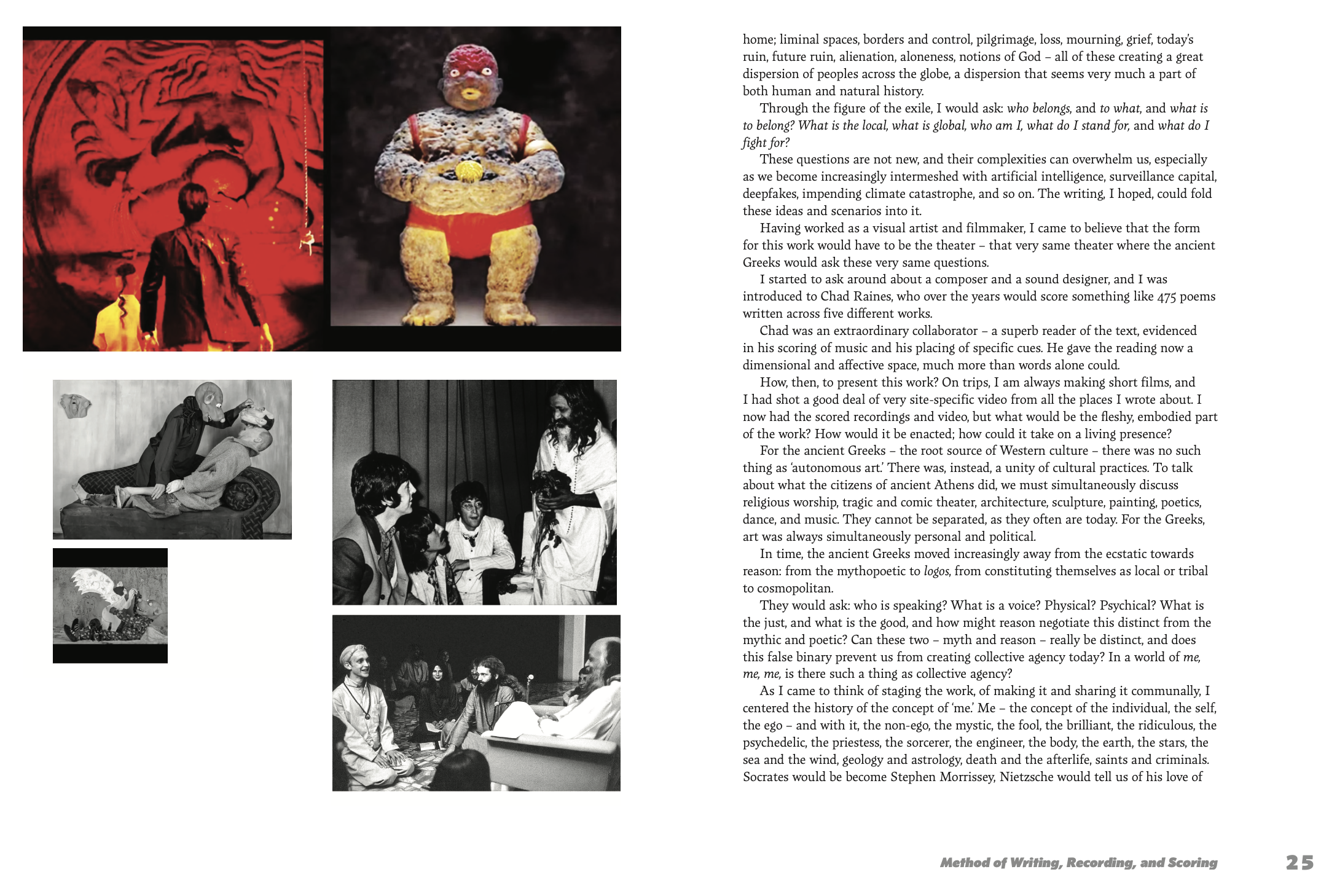
A collage of four images on a page of text. The first image is an abstract red artwork with black lines. The second image is a figure of a creature with a red head, yellow lips, and body textured like stone, wearing a red shorts and holding a yellow object. The third image depicts a person wearing a mask and black outfit, kneeling on a table with a sculpture or prop. The fourth image shows a group of people talking and engaging in a discussion or performance, with some seated on the floor, in black-and-white.

Photograph of a theatrical performance with several performers, including one person with gray hair and colorful face paint, wearing a white robe, and three women in white dresses. The scene is lit with colorful stage lighting and appears to be part of an artistic or ritual presentation.

Collage of photos showing performers wearing masks and engaging in artistic dance and movement on stage.

A page from a publication featuring a dark, artistic photo of a woman with curly hair dressed in blue, appearing distressed or intense, next to text about chapters titled 'GOD-REALLY, PERSONAGES' and 'PURE MADNESS,' with reflections of statues and other figures in smaller images in the background.

Collection of photos showing individuals performing gesture-based actions, some holding guns and appearing to act out scenes, with a person in a jacket and glasses in the foreground, and background scenes with stage lighting and screens.

Photograph of a person dressed in shiny silver clothing with long dark hair, standing outdoors under a blue-tinted sky and trees, with another similar figure partially visible in the background.

Three women in white dresses perform a dance with their arms extended, illuminated by stage lighting in front of a blue background with projected images.

Photographs of people participating in a performance or dance, set against a backdrop of abstract visuals, with performers dressed in white or neutral tones, engaging in expressive movements.

A stage scene with a performer dressed as a chef holding a wine glass, illuminated by colorful lighting with a large umbrella behind the stage.

Photographs of people at an art or multimedia exhibition, showing reflections, shadows, and digital projections on the walls and glass surfaces.

Photograph of an art installation and a performance space with an audience. The installation features flowing white fabrics suspended from the ceiling in a dark, illuminated environment. An elderly performer is on stage, wearing a dark jacket and speaking into a microphone. The audience is seated, watching the performance.

Photographs from a theatrical performance, showing actors on stage, some lying on the ground, others engaging in dramatic scenes, with audience members visible in the background, and scenes involving movement and costumes.

Photograph of a live performance or art installation with two performers on stage dressed in colorful costumes, surrounded by an audience, with various visual elements and photos displayed in the background.

A man with glasses reading from a paper on stage, surrounded by projection screens displaying abstract and human images, with pages of text to the right.

A collage of art images and a person in a scene of a performance or art installation with a text-heavy background.

Collage of five images: a black and white photo of a man with a hat and glasses raising his hand, a colorful scene with people holding hands in a dark room with projections, a person lying on a surface with their eyes closed, another person performing on stage with red lighting, and a woman with glasses and a patterned top.

Three performers on stage during a theatrical performance. The first performer wears a large straw hat and a colorful costume. The second performer is an older man with white hair and a yellow outfit, holding a camera. The third performer is dressed in vibrant clothing, wearing a headpiece, and holding a prop. The stage has colorful lighting and background projections.

Group of people at a party, some are dancing and others are dressed in costumes, with colorful lighting and a lively atmosphere.

Set of four photos showing people engaged in a water-based performance or ritual in a dimly lit environment, with colorful and dark lighting effects, and a person sitting on a step.

A series of images depicting individuals participating in a theatrical or artistic performance. The first image shows a man with white hair and a beard, dressed in white, sitting cross-legged and smiling. The second image shows an older man being assisted by a woman, also dressed in white, with her hands on his head and arm, appearing to perform a ritual or act. The background includes dark, artistic scenery with some abstract elements.

Collage of theatrical costumes, masks, and performers in artistic poses, with a printed poem on the right side.

A person in a deep-sea diving suit with a large helmet, standing inside an environment that appears to be underwater or an underwater-themed setting with blue and green hues and abstract structures.

Photos of people performing dance or theatrical acts with colorful, draped fabric in an indoor space with projected visuals on the walls.

Photographs of people participating in a theatrical performance or art installation, with actors dressed in white, some wearing masks, and engaging in expressive movements and poses, set against a mirrored and colorful stage background.

A collage of five images depicting dancers in various movements and poses, with some dressed in white costumes and others in colorful attire, set against dark and vibrant backgrounds.

A person with blond hair tied back, wearing a black shirt, is kneeling on the ground. They are bending forward and appear to be reaching or working with a wire spool or circular object on the floor. The background includes purple-toned wallpaper or decorative fabric with floral and geometric patterns.

A mannequin with a white face and dark clothing holding a colorful flag with a red cross, standing in a dark room with projections on the wall.

A person dressed in a black outfit and a tall black hat with a red feather is leaning over another person who is wearing a pink gown and a mask, holding a bottle, in a dimly lit room with purple and blue lighting and sheer fabric draped from the ceiling.

Collage of vibrant, abstract images featuring performers in costumes and futuristic settings, with a focus on colorful lighting and sci-fi themes.

Two individuals wearing bird masks, one with a vibrant green and purple mask resembling a peacock, and the other with a blue mask resembling a bird of prey, standing in a dark environment with colorful lighting.

The image contains three photographs of individuals in a dark, immersive setting with colorful lighting. The first photograph shows a person with pink hair, dressed in purple, looking to the side. The second depicts a woman with side profile in red attire, and the third shows a person in a suit with an alien-like face, surrounded by vibrant, glitchy visual effects.

Two photographs of a woman performing a dance or theatrical presentation, dressed in a large red flowing fabric, with other performers and audience members visible in the background, and a brightly lit, colorful, indoor setting.

Photographs of people performing a dance or theatrical act with red lighting and flowing orange fabric. Text on the right discusses a café called Utopia and reflections on language and experience.

A collage of images showing a theatrical performance with performers wearing masks, hats, and colorful costumes on stage with draped fabrics and lighting effects.

A digital collage featuring abstract and surreal imagery of women holding umbrellas, integrated with transparent layers of human faces and a background with a dreamy sky. The composition emphasizes artistic expression and imagination.

A woman with long hair, dressed in a shiny top, sitting on a colorful, flowing fabric, holding a clear glass orb. She is in front of a textured background with a blue and green abstract image and a lamp or umbrella casting light.

A theatrical performance featuring individuals dressed in costumes with colorful, iridescent lighting effects, including a person in a clown mask, with a background of draped fabrics and vibrant lighting.

A collage of four images showing performers in colorful, illuminated costumes and outfits on stage or runway, with one image featuring a woman in black fishnet attire and theatrical makeup amidst a backdrop of vivid lighting and decorations.

Photographs of performance art featuring people in costumes and colorful fabrics, with several individuals engaging in expressive movements and poses in an artistic setting.

Three women performing on stage with colorful, translucent fabric in the background, creating an artistic and spiritual scene.

A collage of four photographs with pink curtains in a dimly lit room, featuring silhouettes of people, some holding skulls, with dark and moody lighting.

A person with blonde hair wearing an orange jacket and holding a stack of books on their back, viewed from behind in a lively, colorful scene with bright lights and other people present.

A person wearing a striped shirt and a hat with a brim, holding a large bouquet of dollar bills in front of their face, against a dark, colorful background.

A woman in traditional attire performing a dance or theatrical pose in an indoor setting with artistic and spiritual-themed decorations.

Multiple women are performing dance and yoga in a room with sheer curtains and artistic wall murals, with some women blindfolded.

A theatrical scene with people in colorful costumes behind translucent fabric, with some holding props and engaged in dance or performance.

Photographs of actors performing in an art piece, with some dressed in white and others appearing in colorful costumes, set against a textured background with fabric and stage elements.

Photographs of a stage performance, featuring dancers or performers, with colorful lighting and projections, captured from different angles.

Three colorful digital art images depicting people and abstract shapes, combined with a page of text from a book or article discussing virtual reality, digital avatars, and augmented imagery.

A woman dressed in traditional Indian attire with jewelry, wearing earrings and a nose ring, with her hands folded in a gesture, illuminated in blue light with a blurred background and figures.

Photographs of performers dancing and posing in a stage setting with colorful lighting and a green background.

Multiple photos showing a scene with diverse people sitting and interacting in an art or performance setting, with draped fabric and colorful background elements.

A woman with gray hair, wearing a patterned shirt, is looking at a projection of a digital image of a sculpture of a sphinx inside a museum or gallery.

Black and white photograph of a woman lying on her side on an ornate patterned carpet. She has curly hair and is dressed in a vintage-style outfit, with her head turned to the side, partially obscured by her arm.

A collage of various black and white and colored images depicting different forms of dance, performance, and cultural expressions, accompanied by a page of text discussing choreography and body movement.
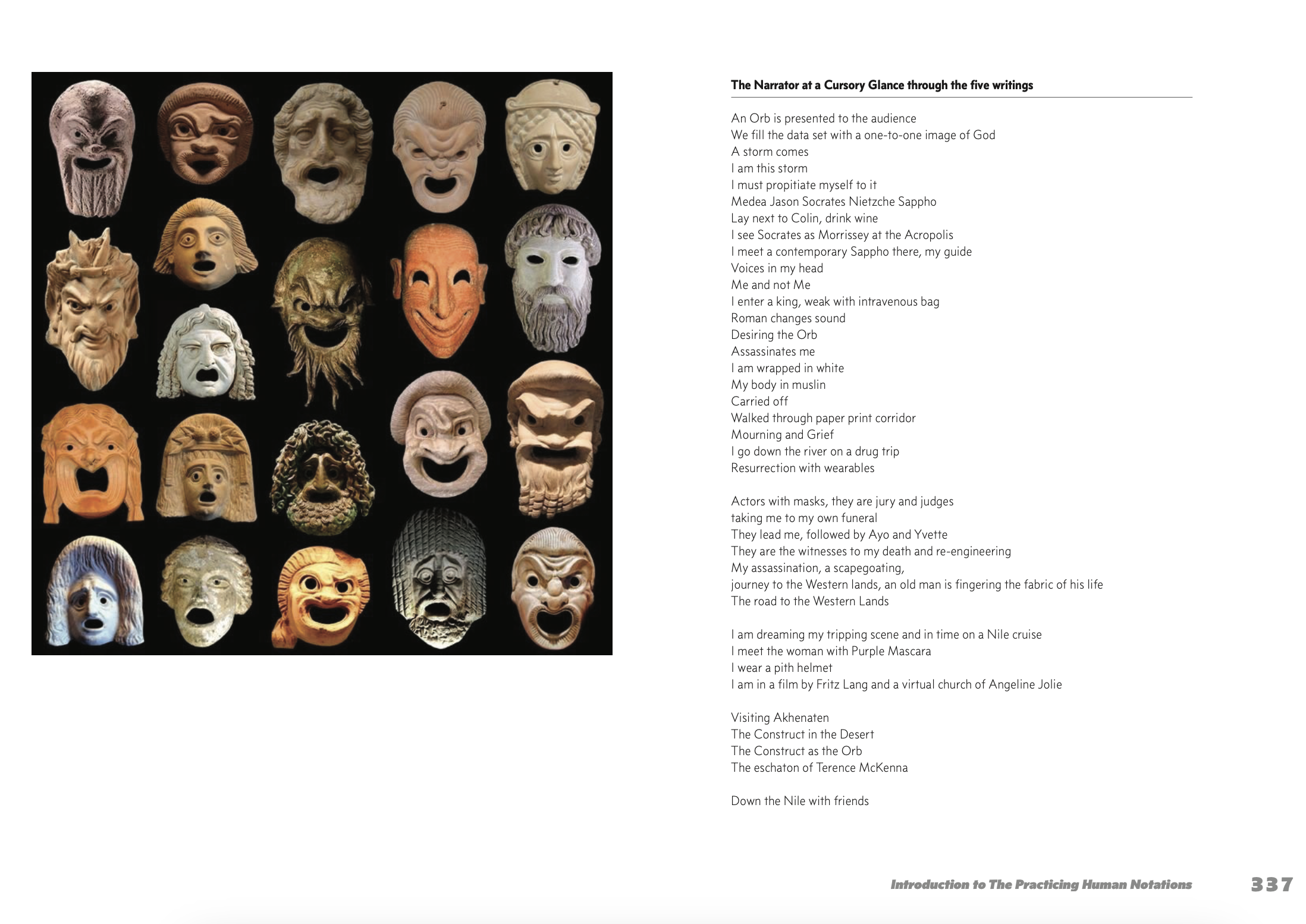
Collection of traditional masks of various expressions and designs arranged on a dark background.

A collection of images related to India, including people bathing in a river, a person relaxing in a natural hot spring, a woman selling flowers on a lake, and various artistic representations of Indian deities and spirituality.

A collage of historical photos and maps related to India, including mountain landscapes, ancient temples, and portraits of Indian people, with the text 'Introduction to The Practicing Human Notations' at the bottom right.

An illustration depicting a diverse group of people engaged in various activities, including a scene of a battle or negotiation with prominent figures and a background of traditional and modern architecture.
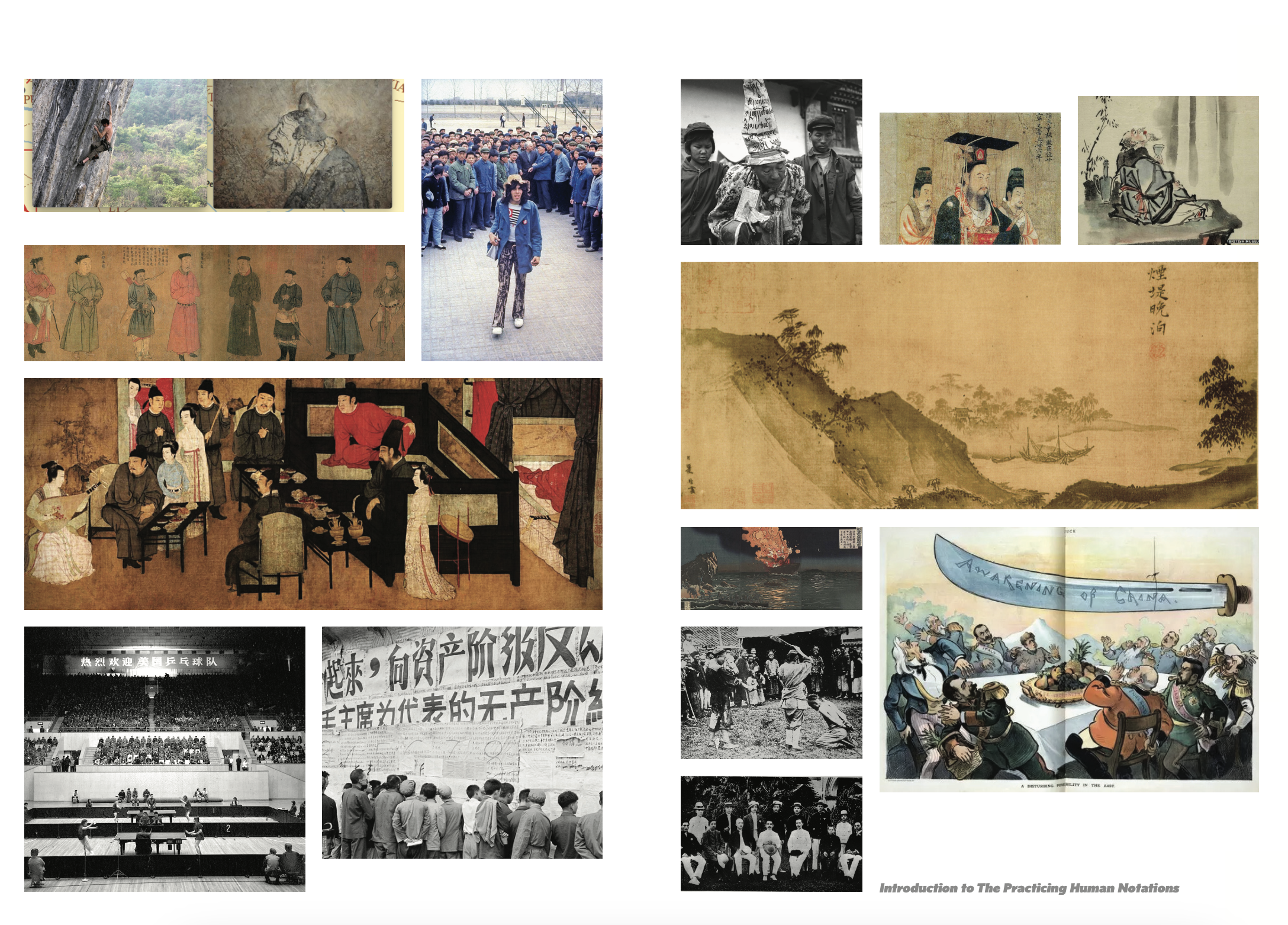
A collage of historical and cultural images, including paintings, photographs, and sketches depicting traditional Chinese scenes, modern protests, sports events, and a boat, with some images in black and white and others in color.

A page from a book or magazine with text about Hong Kong and a column of small images on the left. The images include a street scene with outdoor seating, a person sitting inside an enclosure, a woman with a robot, flowers, and a high-rise apartment building.

A collage of scenes including an airplane flying over a city, a person painting on a digital screen, people skiing in snow, a restaurant with people dining, a woman shopping for records, a crowded street, a fish dish, cityscapes, a forest, a marketplace, an artist's studio, and a city street with a crowd and red lanterns.

Page with multiple images of pyramids, statues, and historical figures, along with a paragraph of text discussing Luxor, Egyptian antiquarian society, and ancient Egypt.

A digital course page showing a grid of small thumbnail images, including scenes from Greece with a woman on a rooftop, harbor and cityscape photos, vintage portraits, and close-up of various plants and trees. The page contains textual content discussing Greece, self-awareness, and human notation, with the chapter title "Introduction to The Practicing Human Notations" and page number 321.

Multiple projection screens displaying abstract visuals in a dark, immersive environment with performers in futuristic costumes, including masks and shiny metallic fabrics, engaged in a virtual or multimedia performance.

A collage of five images on a page with text discussing various performers and performances. The top left image shows two women wearing white masks with a woman in a black top. The middle left image features a woman in a dance pose in a studio. The bottom left image depicts a woman creating art on a large canvas. The bottom right image shows a face illuminated with colorful lighting.

Photograph of a woman wearing a knit cap and green fleece jacket, reading a script or paper in dimly lit room with colorful projection on the wall behind her.

Photographs of a person with a shiny metallic mask, a person with a transparent balloon covering their head with an eye and face reflections, and a group of people in a pink-lit space performing a ritual or dance.

A collage of various sculptures and a drawing of a face with artistic embellishments, including a small figure on top, vibrant colors, and textured details.

A man with glasses and gray hair smiling, wearing a red shirt with striped collar, sitting inside a room with ornate ceiling lighting and decorative wall elements.

Multiple images of a theatrical or performance art scene with colorful and abstract lighting, masks, and costumes.

Collage of performers in creative costumes participating in various stage performances, including dance, acting, and multimedia presentations.

Photographs of people engaged in a dance or performance, illuminated with colorful lighting, framed by curtains, and a person with painted face and costume, possibly a performer in a theatrical or artistic setting.

Three individuals are engaged in a theatrical or performance art scene. One person is lying with their head tilted back, possibly in a pose or dance, with colorful fabrics or curtains in the background illuminated by stage lighting. The second person, standing behind them, appears to be observing or participating, while the third person, sitting and dressed in traditional attire, is smiling or in a contemplative pose.

Two women performing traditional Indian dance on stage with colorful lighting and fabric props.

A collage of images including a stylized illustration of a person with a large head, wearing glasses and traditional Indian accessories, surrounded by various cultural images such as a fish, Buddha statues, and lush green nature, accompanied by text about Indian dance and culture.

A collage of performance art and theater scenes with a focus on masks, costumes, and masks, featuring black and white and color photographs of actors, dancers, and performers in various settings.

A woman with curly red hair, dressed in a long, light-colored gown with red shoes, stands on a stage with a dark background and a curtain. She appears to be performing or posing.

Three images: the first shows a dancer wrapped in plastic performing on stage, the second shows the face of a person wearing a clear face shield, and the third depicts a hospital bed with red and white linens in a dimly lit room.

A collage of five images: a black and white photo of people sitting and a person standing, a group of people in masks and helmets outdoors, a person shopping at an outdoor market, a figure spraying disinfectant in a room, and two dogs walking on a rainy sidewalk.

Photograph of a woman standing inside a room filled with various art pieces and photographs, some covered with plastic sheets, with an open window showing trees outside.

A collage of artistic photographs and artwork featuring dancers, models, and creative scenes, with a paragraph of text on the right discussing reality and politics.

A collage of various artistic, theatrical, and protest images with a poem about memory, reality, and perception on the right side.

A collage of photographs and text relating to Egyptian culture, desert landscapes, art, and modern life scenes.

Silhouettes of two people standing in front of a large fire with orange flames, in a dark environment.

Collage of six images from a stage performance featuring dancers and performers in colorful, dramatic lighting, with some images showing a performer lying on the ground and others reaching upward, with a backdrop of floral and abstract designs.

Two women performing a dance or theater piece with colorful, abstract background projections.

A collage of six images from an art installation, showing performers interacting with abstract projections, drawings, and each other in a dimly lit space with colorful lighting.

A performer in a white dress and scarf covering her mouth, standing in front of a stage curtain, with other performers in colorful costumes behind her at a theatrical performance.

Photographs from a performance event, showing an individual in colorful attire with a headpiece, energetic movements, and abstract visual projections, with event details noted on the right side of the image.

Collage of three images from a theatrical or performance art show with performers in various costumes and props, including umbrellas and masks, in a surreal and colorful setting.

Photos of a theatrical performance with actors in traditional costumes, set design, and audience members visible in the background.

Photographs of a theatrical performance showing dancers in costumes and a stage scene with various props and background elements, from a program or illustrated booklet.

Series of theater or performance art images featuring performers in costumes, masks, and theatrical makeup, engaging in various poses and activities on stage with colorful lighting and abstract backgrounds.

A woman wearing a white theatrical mask in front of a wall with black-and-white photographs of classical sculptures and Greek figures, with colorful stage lighting.

List of names on a two-page spread, with some names followed by references or descriptions, organized into sections. The pages are numbered 538 and 539.

A page from a book or document with a pink cover labeled 'References' and a list of various authors and works on the right side.